One of Christianity’s most controversial issues—and one of our most frequently asked questions—involves the concept of Eternal Security. There are good scholars on all sides of this issue, yet we felt it would be useful to explain our own views on this highly charged subject.
We believe that the root problem stems from a lack of precision in our definitions. Earl Rademacher brings this to light when he declares that, “I have been saved; I am being saved; and, I will be saved.” He is simply highlighting the three tenses of “salvation.”
Three Tenses of “Being Saved”
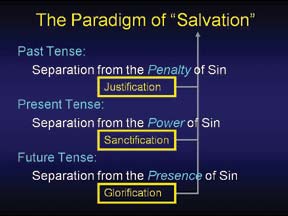 We have been saved: positionally from the penalty of sin (Eph 2:8, 9). This is often called justification salvation.
We are being saved: from the power of sin, operationally, by the Holy Spirit, moment by moment (Rom 6). This is usually called sanctification.
We shall be saved: from the presence of sin; after the resurrection, often called glorification, or “the redemption of our body” (Rom 8:23).
Eternal Security
Can a man (or a woman) lose his salvation? Yes! If it depends on him (or her).
The Arminian denies that the true child of God is eternally secure. The Calvinist (i.e., “Experimental Predestinarian”) insists that, if he does not persevere in holiness, he was never regenerate in the first place. It seems that 400 years of doctrinal disputes—with outstanding scholars on both sides of this continuing issue—appears to be the result of a failure to adequately distinguish between justification salvation and the possibility of several different kinds of inheritances or rewards.
There is an alternative view which lies between these two extremes. The Partaker, the metachoi, as a true child of God, is “obligated” to persevere (Paul’s word, Rom 8:12), but he might not. If he does not, he does not forfeit salvation but faces divine discipline in time and the loss of reward at the judgment seat of Christ (2 Cor 5:10; 1 Cor 3:11-15). (We’ll take up some of these issues in subsequent articles.)
All three persons of the Godhead have their share in preserving to fruition that which God has determined.
 The Basis of Our Security: Part I
It depends upon God the Father:
1) Upon His Sovereign Purpose
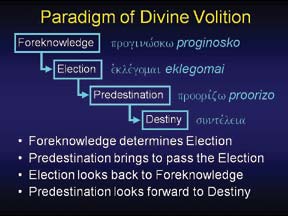
His eternal purpose is declared (Eph 1:11-12). This eternal purpose is anchored within the veil, and confirmed by an oath: (Heb 6:17-20). It is also exemplified in the unbreakable chain of five links committed in Romans 8:
And we know that all things work together for good to them that love God, to them who are the called according to his purpose. For whom he did foreknow, he also did predestinate to be conformed to the image of his Son, that he might be the firstborn among many brethren. Moreover whom he did predestinate, them he also called: and whom he called, them he also justified: and whom he justified, them he also glorified.
Romans 8:28-30
(A more penetrating review of these extra-temporal relationships will be treated in subsequent articles.)
2) Upon His Solemn Promise
Our salvation depends upon His promise, and not our faithfulness:
Therefore it is of faith [nothing on man’s part], that it might be by grace [everything on God’s part]; to the end the promise might be sure...
Romans 4:16
If it depended at any point upon human ability to continue to believe, then the promise could not be secure. The promise that those who believe will be saved is confirmed everywhere (Gen 15:6; Jn 3:16; Acts 16:33; Rom 4:23-24, et al.)
3) Upon His Infinite Power
He is free to save us. Christ’s death has rendered God free to save us in spite of moral imperfection. Our eternal security does not depend upon our moral worthiness. Christ is the propitiation for our sins (1 Jn 2:2).
(To assume that there is some sin which is sufficiently serious to cause us to forfeit our salvation is to assume that we were less worthy of salvation after having committed this sin than before, and it reduces salvation down to human ability to merit it.)
He has purposed to keep us saved:
And this is the Father’s will which hath sent me, that of all which he hath given me I should lose nothing, but should raise it up again at the last day.
John 6:39
And here is my favorite:
And I give unto them eternal life; and they shall never perish, neither shall any man pluck them out of my hand. My Father, which gave them me, is greater than all; and no man is able to pluck them out of my Father’s hand.
John 10:28-29
“Shall never” in John 10:28 is a double negative, a form which, in the Greek, is especially emphatic. And note that there are two hands involved: the Father’s and the Son’s!
[Furthermore, if I can lose my salvation (and if I may presume to quote my impish old friend, Walter Martin), then I have a new name for God: “Butterfingers!”]
4) Upon His “Much More” Love
His intent is love based (Cf. Rom 5:6-10): God knew when He saved us that we were totally depraved, and therefore any new manifestation of sin in our lives after our conversion cannot be any motivation to God to change His mind and withdraw His grace and His salvation (Cf. Rom 11:29; Rom 8:32, 38-39).
He saved us for reasons independent of us and outside of us. He was motivated by His electing love, and not by observation of good in the sinner.
5) Upon His Answer to the Prayer of His Son
We, as believers, are called many things in Scripture: saints, believers, elect, sheep, partakers, etc. But the title most dear to the heart of Christ is repeated seven times in His high priestly prayer (Jn 17): “those whom thou hast given me.” (Cf. Jn 17:11-12). Jesus prays that we will be kept from hell (Jn 17:15) and will be with Him in heaven (Jn 17:20, 24). [This keeping is from perishing, not necessarily all forms of inheritance.] I believe that the Father always answers the prayers of the Son (Jn 11:42).
This leads to the second basis for our security, which we will explore in the next article: “The Basis of Our Security - Part II: It (also) Depends Upon God the Son.”