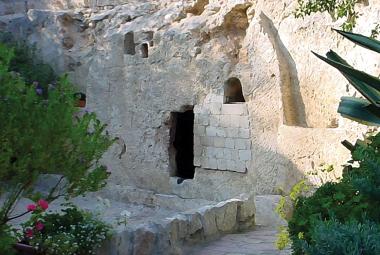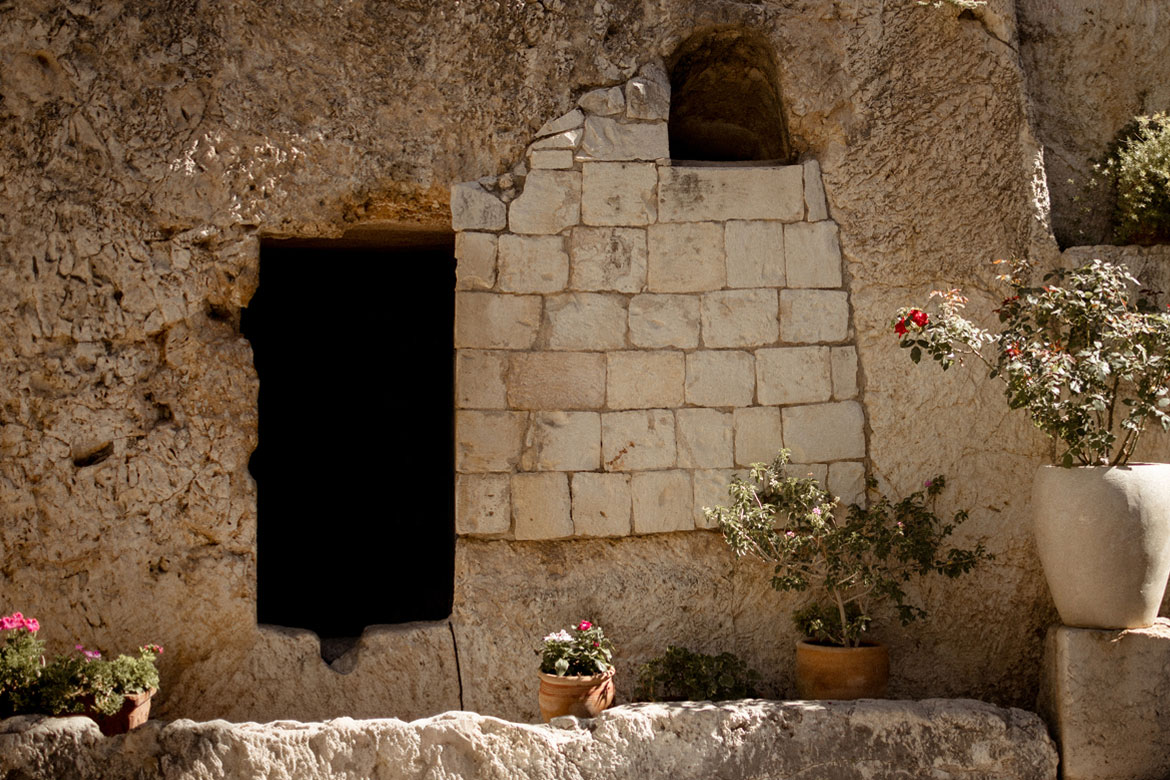
Early in the morning on the first day of the week, the women who followed Jesus went to the tomb with burial spices. Instead of their dead Lord, they found angels who announced that Jesus had risen again as He said He would, and they urged the women to go tell the disciples.
The four Gospel accounts of the events of Resurrection Morning are very interesting to study; they truly demonstrate what happens when four different people try to summarize an event while focusing on different details. If we were to interview people who had witnessed a car accident, we would get a similar array of accounts. People get hung up on differences between the Gospel accounts, and they shouldn’t. We’d have more concern about the accounts if they were exactly, the same, because that would mean they were tailored. The four Gospel writers offer different details and different perspectives, while producing a consistent, multi-faceted picture; which gives us confidence that these accounts were based on real eye-witnesses to an important event.
There are certain key details of that Sunday morning that are consistent between the Gospels. First, it was a group of women who discovered the stone rolled away and the tomb empty. Next, those women saw angels who told them that Jesus was alive. Matthew and Mark focus on one angel, while Luke and John both specify that there were two angels total. The Gospels all credit the women with going to tell the disciples that Jesus was alive, although Mary Magdalene was the primary messenger. (Mark and Luke note that the disciples didn’t believe them at first.) It’s clear from the accounts that Jesus had a special encounter with Mary Magdalene at a point when she was separate from the other women, likely because she ran off and found Peter and John, while the other women stood there a bit stunned. It didn’t take long for Jesus to meet with the whole group of women and send them to notify the disciples of the good news.
Let’s read through each of the four accounts here and put them together:
Matthew
In the end of the sabbath, as it began to dawn toward the first day of the week, came Mary Magdalene and the other Mary to see the sepulchre. And, behold, there was a great earthquake: for the angel of the Lord descended from heaven, and came and rolled back the stone from the door, and sat upon it. His countenance was like lightning, and his raiment white as snow: And for fear of him the keepers did shake, and became as dead men. And the angel answered and said unto the women, Fear not ye: for I know that ye seek Jesus, which was crucified. He is not here: for he is risen, as he said. Come, see the place where the Lord lay. And go quickly, and tell his disciples that he is risen from the dead; and, behold, he goeth before you into Galilee; there shall ye see him: lo, I have told you. And they departed quickly from the sepulchre with fear and great joy; and did run to bring his disciples word. And as they went to tell his disciples, behold, Jesus met them, saying, All hail. And they came and held him by the feet, and worshipped him. Then said Jesus unto them, Be not afraid: go tell my brethren that they go into Galilee, and there shall they see me.
Now when they were going, behold, some of the watch came into the city, and shewed unto the chief priests all the things that were done. And when they were assembled with the elders, and had taken counsel, they gave large money unto the soldiers, Saying, Say ye, His disciples came by night, and stole him away while we slept. And if this come to the governor’s ears, we will persuade him, and secure you. So they took the money, and did as they were taught: and this saying is commonly reported among the Jews until this day.
Matthew 28:1-15
Mark
And when the sabbath was past, Mary Magdalene, and Mary the mother of James, and Salome, had bought sweet spices, that they might come and anoint him. And very early in the morning the first day of the week, they came unto the sepulchre at the rising of the sun. And they said among themselves, Who shall roll us away the stone from the door of the sepulchre? And when they looked, they saw that the stone was rolled away: for it was very great. And entering into the sepulchre, they saw a young man sitting on the right side, clothed in a long white garment; and they were affrighted. And he saith unto them, Be not affrighted: Ye seek Jesus of Nazareth, which was crucified: he is risen; he is not here: behold the place where they laid him. But go your way, tell his disciples and Peter that he goeth before you into Galilee: there shall ye see him, as he said unto you. And they went out quickly, and fled from the sepulchre; for they trembled and were amazed: neither said they any thing to any man; for they were afraid. Now when Jesus was risen early the first day of the week, he appeared first to Mary Magdalene, out of whom he had cast seven devils. And she went and told them that had been with him, as they mourned and wept. And they, when they had heard that he was alive, and had been seen of her, believed not.
Mark 16:1-11
Luke
Now upon the first day of the week, very early in the morning, they came unto the sepulchre, bringing the spices which they had prepared, and certain others with them. And they found the stone rolled away from the sepulchre. And they entered in, and found not the body of the Lord Jesus. And it came to pass, as they were much perplexed thereabout, behold, two men stood by them in shining garments: And as they were afraid, and bowed down their faces to the earth, they said unto them, Why seek ye the living among the dead? He is not here, but is risen: remember how he spake unto you when he was yet in Galilee, Saying, The Son of man must be delivered into the hands of sinful men, and be crucified, and the third day rise again. And they remembered his words, And returned from the sepulchre, and told all these things unto the eleven, and to all the rest. It was Mary Magdalene, and Joanna, and Mary the mother of James, and other women that were with them, which told these things unto the apostles. And their words seemed to them as idle tales, and they believed them not. Then arose Peter, and ran unto the sepulchre; and stooping down, he beheld the linen clothes laid by themselves, and departed, wondering in himself at that which was come to pass.
Luke 24:1-12
John
The first day of the week cometh Mary Magdalene early, when it was yet dark, unto the sepulchre, and seeth the stone taken away from the sepulchre. Then she runneth, and cometh to Simon Peter, and to the other disciple, whom Jesus loved, and saith unto them, They have taken away the Lord out of the sepulchre, and we know not where they have laid him. Peter therefore went forth, and that other disciple, and came to the sepulchre. So they ran both together: and the other disciple did outrun Peter, and came first to the sepulchre. And he stooping down, and looking in, saw the linen clothes lying; yet went he not in. Then cometh Simon Peter following him, and went into the sepulchre, and seeth the linen clothes lie, And the napkin, that was about his head, not lying with the linen clothes, but wrapped together in a place by itself. Then went in also that other disciple, which came first to the sepulchre, and he saw, and believed. For as yet they knew not the scripture, that he must rise again from the dead. Then the disciples went away again unto their own home.
But Mary stood without at the sepulchre weeping: and as she wept, she stooped down, and looked into the sepulchre, And seeth two angels in white sitting, the one at the head, and the other at the feet, where the body of Jesus had lain. And they say unto her, Woman, why weepest thou? She saith unto them, Because they have taken away my Lord, and I know not where they have laid him. And when she had thus said, she turned herself back, and saw Jesus standing, and knew not that it was Jesus. Jesus saith unto her, Woman, why weepest thou? whom seekest thou? She, supposing him to be the gardener, saith unto him, Sir, if thou have borne him hence, tell me where thou hast laid him, and I will take him away. Jesus saith unto her, Mary. She turned herself, and saith unto him, Rabboni; which is to say, Master. Jesus saith unto her, Touch me not; for I am not yet ascended to my Father: but go to my brethren, and say unto them, I ascend unto my Father, and your Father; and to my God, and your God. Mary Magdalene came and told the disciples that she had seen the Lord, and that he had spoken these things unto her.
John 20:1-18
Thus, from the four accounts we can piece together an order of events.
A glorious, fiery angel descends and rolls away the stone, terrifying the guards that had been set as watchman by the chief priests. Several women, Mary Magdalene, Mary the mother of James, Salome, Joanna and others reach the tomb with burial spices they had prepared. They find the stone rolled away, and Mary Magdalene runs to tell the disciples.1 The other ladies draw into the tomb and see the angels of the Lord, who tell them that Jesus has risen and to go tell the disciples.2 Mary finds Peter and John, and they run ahead of her to the tomb, look in and find it empty, and they leave.3 Mary follows them back, and while she is alone, weeping, she also sees the two angels, but she still doesn’t understand.4 She sees Jesus, and thinks He’s the gardener until He speaks her name.5 She goes to tell the other disciples (who don’t believe her).6 The other women see Jesus as well, and fall and worship at His feet, and then they go to tell the rest of the disciples (who don’t believe them).7
Only Matthew gives us the viewpoint of the men who were guarding the tomb before the women came. He lets us know that the angels descended in great glory and rolled back the stone, petrifying the guards. Matthew is summarizing the approach of the women, and it sounds as though the women saw the angel descend. However, we know from the other accounts that they arrived to find the stone already rolled back, and the angels waiting inside. It was the guards who saw an angel arrive and roll back the stone. There were no guards to harass the women when they arrived, because the men had fled to tell the chief priests what had happened.
Now when they were going, behold, some of the watch came into the city, and shewed unto the chief priests all the things that were done. And when they were assembled with the elders, and had taken counsel, they gave large money unto the soldiers, Saying, Say ye, His disciples came by night, and stole him away while we slept. And if this come to the governor’s ears, we will persuade him, and secure you. So they took the money, and did as they were taught: and this saying is commonly reported among the Jews until this day.
Matthew 28:11-15
Matthew is the only Gospel writer to get the inside information about what happened with the guards that weekend. John, as usual, focuses on very personal things, describing how he and Peter ran and found the empty tomb. Luke summarizes this, but John goes into detail about how they found the tomb empty and how the linen cloths and the napkin for His head were just lying there. John goes into detail about the broken-hearted Mary Magdalene, grieved and weeping over the missing body of her Lord. John describes her precious encounter with Jesus, and her great excitement at seeing Him alive.
When Mary saw Jesus and knew it was He, she apparently had a death grip on His ankles. What the King James translates, “Don’t touch me,” should more appropriately be translated, “Don’t cling to me.” In other words, “Let go, Mary. I haven’t gone anywhere yet.”
From that point on, Jesus begins to show Himself to all those close to Him.
Subsequent Appearances
The appearances that morning were not the only ones that Jesus made. Over the course of the next 40 days, Jesus visited the disciples on several occasions and appeared to large groups of people, including above 500 at one time. After He ascended, He continued to appear to people! He showed Himself to:
- Cleopas and another disciple on the road to Emmaus: Luke 24:13-32.
- Peter, sometime that day: Luke 24:34; 1 Corinthians 15:5.
- Ten disciples, that night without Thomas: Luke 24:36; John 20:19-24.
- Eleven disciples, eight days later with Thomas: John 20:26-31.
- Seven disciples for breakfast in Galilee: (John 21:9-14).
- Eleven disciples in Galilee Matthew 28:16-20.
- Five hundred, probably in Galilee: 1 Corinthians 15:6.
- James in Jerusalem: 1 Corinthians 15:7.
- Many at the Ascension: Luke 24:44.
- Stephen when he is stoned: Acts 7:55.
- Paul, on the Damascus Road: Acts 9:3-7.
- Paul in the Temple: Acts 22:17-21.
- John on Patmos: Revelation 1:10-20.
Significance
We focus on the death of Jesus Christ at Easter, but even more, we focus on His resurrection. Most people do not realize that the Lord’s resurrection is just as important for our salvation as His death on the cross. There are highly significant things about the resurrection of Jesus Christ that I want to point out:
First, it verifies the truth of scriptures like Psalms 16:10, 110:1, and Isaiah 53:10-12. These tell us that Jesus was greater than David, that He would die, and yet His body would not rot in the grave. He would live again. He would prolong His days and enjoy His reward!
We also recognize that if the body had been stolen by the Lord’s enemies, they would have produced it in order to denigrate even His memory. Instead, on one day the disciples were discouraged and hiding in defeat, and just weeks later they were standing out in the crowds at Pentecost, declaring Christ’s resurrection from the dead and walking in joyful victory. They were healing people in the streets, like the lame man in Acts 3:1-10.
Peter, who had denied Jesus when confronted by a little servant girl, was suddenly bold and speaking about Jesus in the streets. Full of the Holy Spirit in Acts 4, he told the high priests and the council that Jesus had risen from the dead and was the source of salvation. He and John declared that they would keep speaking in the name of Jesus, whether the leadership approved or not. Ultimately, they proved willing to die for the truth of Christ’s resurrection, and all but John faced the death of martyrdom over the course of the first century.
The resurrection of Jesus Christ is exceptionally important. It proves that Jesus is God’s Son.8 It assures us of our own future resurrection.9 It offers proof of a future judgment, because the physical death is not the end.10 It means that Jesus is our Priest forever, because He will not die.11 By its power, we ourselves walk in newness of life (being born again in our spirits),12 and it gives us assurance of our own future eternal inheritance in Christ.13
Seventh Day
There’s something else I want to point out. The seventh day was not ordained by the Law in Exodus 20. It was ordained in Eden in Genesis 2. The Israelites did not gather manna on Shabbat in Exodus 16, four chapters before the Law was given. The Sabbath is not just a Jewish practice, but it becomes idiomatic of the Jewish people. It’s interesting how calendars, especially in Europe, take Monday as the first day of the week and make Sunday the seventh day of the week. That’s not biblical. Monday is not the first day of the week, neither is Sunday the seventh. That’s Satan’s attempt to obscure the reality. It’s interesting that the Bible makes clear we must not defraud our neighbors by moving ancient landmarks,14 and most of us relate this admonition to simple property issues. However, the rabbis feel it is also an admonition not to change God’s landmarks, which includes His calendar.
The future temple of the Millennium will only be open on the Sabbath and the new moon; it won’t be open on Sunday.15 That’s kind of interesting.
The Road to Emmaus
Mark 16:12 mentions that Jesus met with two people as they walked into the country, but only Luke goes into detail about this Sunday morning encounter.
And, behold, two of them went that same day to a village called Emmaus, which was from Jerusalem about threescore furlongs. And they talked together of all these things which had happened. And it came to pass, that, while they communed together and reasoned, Jesus himself drew near, and went with them. But their eyes were holden that they should not know him.
Luke 24:13-16
This is interesting. Luke tells us their eyes were held captive so that they didn’t recognize Jesus. These were men who knew Jesus. They weren’t in the inner circle of 12 disciples, but they had been following Jesus and they knew Him. It’s strange that they didn’t know Him. The Mark verse says He appeared in a different “form.” All we know is that He didn’t look like Himself.
I’m convinced that Jesus certainly had a changed appearance after His death because of the reality of Isaiah 52:14. His face had been damaged during the beatings He received the day of the crucifixion, even to having His beard torn out,16 and people just plain didn’t recognize Him at first. We’ve all experienced this when a friend shaves his beard; we don’t recognize him because of the difference the beard made. If Jesus’ beard was patchy and His face bore new scars, we can understand that He would have looked like a different person. We also have indications that Jesus existed in more than our four space-time dimensions after His resurrection, which might have also altered His appearance.
What we do know is that He approaches these two men, men who know Him, and He starts talking to them as a stranger.
And he said unto them, What manner of communications are these that ye have one to another, as ye walk, and are sad? And the one of them, whose name was Cleopas, answering said unto him, Art thou only a stranger in Jerusalem, and hast not known the things which are come to pass there in these days? And he said unto them, What things?
Luke 24:17-19a
Notice what Jesus says to them. I love this. He’s being the teacher in this passage, but I think it’s great that He asks them, “What things?” with apparently a straight face. He had just been arrested in the dead of night, forced through six trials, beat up and abused, mocked and spit on. He was nailed to a cross, suffered horrific physical, emotional and spiritual agony. He died, was buried, and has risen from the dead in great victory, and He asks them, “What things?” In their well-meaning ignorance, the two disciples give Him a summary of the recent events:
And they said unto him, Concerning Jesus of Nazareth, which was a prophet mighty in deed and word before God and all the people: And how the chief priests and our rulers delivered him to be condemned to death, and have crucified him. But we trusted that it had been he which should have redeemed Israel: and beside all this, to day is the third day since these things were done. Yea, and certain women also of our company made us astonished, which were early at the sepulchre; And when they found not his body, they came, saying, that they had also seen a vision of angels, which said that he was alive. And certain of them which were with us went to the sepulchre, and found it even so as the women had said: but him they saw not.
Luke 24:19b-24
This is their understanding of what happened, and it’s a nice summary of the Gospel accounts. It’s interesting that they had heard reports from the women that Jesus was declared by angels to be alive, and yet they are sad as Jesus approaches them. They should have some excitement at this news, but it’s clear they are among those who didn’t believe the women who brought these reports. Shame on all those doubting men, right? But, are we any better?
I love what Jesus says to them, and they still don’t get who He is:
Then he said unto them, O fools, and slow of heart to believe all that the prophets have spoken: Ought not Christ to have suffered these things, and to enter into his glory? And beginning at Moses and all the prophets, he expounded unto them in all the scriptures the things concerning himself.
Luke 24:25-27
He gave them a seven-mile Bible study on His own identity in the Torah and prophetic books of the Old Testament. What a precious three hours together.
During the past 200 years, scholars have promoted the Documentary Hypothesis of Julius Wellhausen, which argues that four different groups of ancient writers shuffled the Torah together over centuries. Forget all that foolishness. Who wrote the Torah? Moses. How do I know? Because Jesus said so.17 Jesus knew exactly what the Hebrew Scriptures said about Himself in the full meaning of every verse, and He shared His deep understanding with Cleopas and his companion on the walk to Emmaus.
And they drew nigh unto the village, whither they went: and he made as though he would have gone further. But they constrained him, saying, Abide with us: for it is toward evening, and the day is far spent. And he went in to tarry with them. And it came to pass, as he sat at meat with them, he took bread, and blessed it, and brake, and gave to them.
Luke 24:28-30
We easily overlook the significance of tiny details in the biblical text because we don’t understand the first century Jewish culture, and we don’t stop to think about certain things. Who blesses the bread and breaks it? Jesus does. That’s strange! He’s the guest of these two men but blessing and breaking the bread was the host’s job. What do you suppose clued them into His identity? When He broke the bread, they would have seen the nail prints in His wrists.
And their eyes were opened, and they knew him; and he vanished out of their sight. And they said one to another, Did not our heart burn within us, while he talked with us by the way, and while he opened to us the scriptures? And they rose up the same hour, and returned to Jerusalem, and found the eleven gathered together, and them that were with them, Saying, The Lord is risen indeed, and hath appeared to Simon. And they told what things were done in the way, and how he was known of them in breaking of bread.
Luke 24:31-35
There are several remarkable things in these verses. First, Jesus vanishes. He never did this before His death and resurrection, but He does it constantly afterward. He apparently can come and go as He pleases, which I think is fascinating. Second, their hearts burned in their chests as He was talking to them. That’s interesting. People today still testify of burning in their chests during worship or close communion with the Spirit of God. Third, notice again when it was they recognized Jesus.
It was in the breaking of bread, when His wrists would have been exposed with the nail prints in them.
The eleven disciples are still not sure what to make of these reports they keep hearing. Mark 16:13 tells us the disciples still didn’t believe the witness of the two men who recognized Jesus in Emmaus. They are still held captive by fear and grief, refusing to believe the wonderful news that their Lord and friend is alive! That doubt doesn’t last long, however, because Jesus soon appears in the room Himself.
The Upper Room
And as they thus spake, Jesus himself stood in the midst of them, and saith unto them, Peace be unto you. But they were terrified and affrighted, and supposed that they had seen a spirit. And he said unto them, Why are ye troubled? and why do thoughts arise in your hearts? Behold my hands and my feet, that it is I myself: handle me, and see; for a spirit hath not flesh and bones, as ye see me have.
Luke 24:36-39
When Jesus tells Mary not to “touch” Him earlier, He meant, “Don’t cling to me, Mary.” He has the ability to appear at will, but He is no mere spirit. He is a physical, truly material being, which means that He’s hyper-dimensional. That is, He enjoys a dimensionality that exceeds the four space-time dimensions that we’re familiar with. Angels are similar, in that they can appear and disappear from our sight, yet they are physical beings able to interact with humans, whether by killing them18 or by grabbing hold of them.19 Jesus starts to show the men that He is truly a physical being by eating in front of them:
And when he had thus spoken, he shewed them his hands and his feet. And while they yet believed not for joy, and wondered, he said unto them, Have ye here any meat? And they gave him a piece of a broiled fish, and of an honeycomb. And he took it, and did eat before them.
Luke 24:40-43
I love this. He constantly appears after His resurrection preparing or eating food. He’s my kind of guy.
Of course, John tells us that Thomas isn’t there with them when Jesus first appears. Thomas has missed out, and even though his fellow disciples insist that Jesus is alive, Thomas refuses to believe the news.
But Thomas, one of the twelve, called Didymus, was not with them when Jesus came. The other disciples therefore said unto him, We have seen the Lord. But he said unto them, Except I shall see in his hands the print of the nails, and put my finger into the print of the nails, and thrust my hand into his side, I will not believe.
John 20:24-25
This is why, we call him “Doubting Thomas.” It’s easy to understand his cynicism but remember that Jesus had warned the disciples many times that He would be crucified. He’s said many times that He would rise again the third day. Jesus had told them in advance. Then, the women that morning came and said they’d seen angels who told them that Jesus was alive. Then, the two men from Emmaus told them. Then, Peter said he’d seen Jesus. Finally, all the other disciples excitedly tell Thomas that Jesus is alive. The hard crust of Thomas’ heart should have been dented by these reports, but he still refuses to believe. It’s another eight days before Thomas gets to see Jesus himself.
And after eight days again his disciples were within, and Thomas with them: then came Jesus, the doors being shut, and stood in the midst, and said, Peace be unto you. Then saith he to Thomas, Reach hither thy finger, and behold my hands; and reach hither thy hand, and thrust it into my side: and be not faithless, but believing. And Thomas answered and said unto him, My Lord and my God. Jesus saith unto him, Thomas, because thou hast seen me, thou hast believed: blessed are they that have not seen, and yet have believed.
John 20:26-29
Isn’t Jesus gracious? He cares about Thomas, and He is willing to let Thomas feel the nail and spear holes. Thomas is the sort that requires hard evidence, and Jesus gives him the evidence he desires. However, I believe God delights in our faith when we believe Him just because of His Word. The children’s song goes, “Jesus loves me, this I know, for the Bible tells me so.”
All the evidence that Thomas needed was already tucked away in the Scriptures he’d been taught his whole life.
When I was younger, I got heavily into memorizing Scripture. There’s a verse in Zechariah that made less and less sense to me as I tried to learn it. Zechariah 13:6 states, “And one shall say unto him, What are these wounds in thine hands? Then he shall answer, Those with which I was wounded in the house of my friends.” I struggled to understand this verse. I could not understand how a bunch of Roman soldiers driving nails through Christ’s wrists could be considered the house of His friends. It wasn’t until I re-read the Thomas account here that I realized that what wounded Him were not the nails. It was Thomas and his unbelief.
Thomas had followed Jesus for years, had watched Him heal people day after day, feed vast crowds from a little boy’s lunch, walk on water, and calm a storm with His voice. Thomas had seen Jesus at work. Why did he doubt? Because things looked dark and hopeless? Nothing is hopeless for God.
We cannot judge Thomas, because we are just like him. Why do we doubt? We might have times of great victory in the Lord, but as soon as things don’t go our way we begin to fear and think God has abandoned us. Why do we doubt Him? He loves us, and He is trustworthy, and His plans are good. We need to trust and praise the Lord at all times, especially in the darkest seasons of our lives: 1 Thessalonians 5:18 urges us, “In every thing give thanks: for this is the will of God in Christ Jesus concerning you.” Nothing is too big for Jesus the King, and when we give our lives into His hands, entrusting Him with every detail, we begin to see His great power working through us.
Twice Jesus appeared to the disciples as they gathered together in that room, and He would appear to them additional times, but He would not remain with them long. He had told them at the Last Supper that He would have to go away so that He could send the Comforter.
Nevertheless I tell you the truth; It is expedient for you that I go away: for if I go not away, the Comforter will not come unto you; but if I depart, I will send him unto you. And when he is come, he will reprove the world of sin, and of righteousness, and of judgment:
John 16:7-8
John is nearing the end of his story, his personal account of Jesus. John, the beloved disciple, cannot fully explain the many great works of Jesus. He finishes out this chapter by letting us know that we don’t know the half of what Jesus did.
And many other signs truly did Jesus in the presence of his disciples, which are not written in this book: But these are written, that ye might believe that Jesus is the Christ, the Son of God; and that believing ye might have life through his name.
John 20:30-31
Still, John has one last short story to tell, one final moment with Jesus back where it all started for him.
This was an except from Chuck Missler’s book The Easter Story: What Really Happened.
Also available in a two hour video presentation.
https://store.khouse.org
Notes:
1 Mark 16:1; Luke 23:55-24:10; John 20:1-2.
2 Matthew 28:2-7; Luke 24:4-7
3 John 20:3-10
4 John 20:11-13
5 John 20:14-16
6 Mark 16:9-11; John 20:18
7 Matthew 28:8-10; Luke 24:9-11
8 John 10:17-18
9 1 Thessalonians 4:13-18
10 Acts 17:31
11 Hebrews 7:23
12 Romans 6:4
13 1 Peter 1:3-5
14 Job 24:2; Proverbs 22:28
15 Ezekiel 46:1
16 Isaiah 50:6
17 Matthew 8:4, 19:8; Mark 1:44, 7:10, 12:26; Luke 5:14, 16:29-31, 20:37, 24:44; John 3:14, 5:45-46, 7:19-23
18 2 Samuel 24:16; Isaiah 37:36
19 Genesis 19:10-11