The French Connection
At the end of World War II, Europe recognized that it was no longer a colonial power. Subsequently, France, which had a very high opinion of itself, found itself excluded from the Yalta negotiations between Britain, Russia, and the United States. As a result of that, the French began to actively pursue a relationship with their old colonies in North Africa, which are predominantly Islamic. They then began what is referred to as the Franco-Arab dialogue. In fact, in 1962, President Charles de Gaulle stated, “A French Islamic policy carried out together with the new Algiers, Morocco and Tunisia, perhaps linked tomorrow with North African Federation and with the states of the Middle East, would bring us a prestige which would impress the United States and even Russia.” And so, there was this undercurrent that began as a reaction to what Europe saw as an unbridled superpower. The United States was offsetting Russia, and Europe was the odd-man out. They had destroyed themselves, lost their colonies, and felt left out. Within Europe, France felt this more than anyone else.
The 6-Day War Shock
In 1967, Israel had to fight a coalition of six Arab nations, primarily Egypt, Syria, and Jordan. These combined Arab nations not only were incapable of defeating Israel, but they lost vast amounts of territory following the 6-Day War. Charles de Gaulle presented France’s cooperation with the Arabs as “The fundamental basis of our foreign policy.” By 1973, Israel once again not only defended itself but defeated the combined forces of Egypt and Syria in the Yom Kippur War. As a result of that humiliating experience, the Arab world said, “Enough is enough. We’re tired of these colonists pushing us around, propping up this European state called Israel. We’re going to shut off the oil.” By November 16, 1973, the European Economic Community issued a joint resolution based on the Arab League’s demands: “We will not turn the oil on again unless you meet our political demands.” These demands included:
- The inadmissibility of acquiring land by force.
- Israel must withdraw to the 1949 United Nations armistice lines.
- Include the legitimate rights of the Palestinian people.
They defined a people group that did not exist before 1973.
Arab Policy Makers in the EU
In response to the Arab outcry, the EU formed the European Arab Dialogue, a subcommittee within the European Union. The European Arab Dialogue Subcommittee had to express a joint political will within Europe. The primary condition for any economic agreement with Arab League countries required the creation of a climate of opinion in Europe favorable to Arabs. The principal agent of this policy is the European Parliamentary Association for Euro-Arab Cooperation (EAC), which was founded in 1974. Their objective was to harmonize and integrate. The political sections of the resolution targeted three primary policies in Europe.
- The harsh European view of Israel.
- Creating a climate of opinion favorable to the Arabs.
- The reception of Muslim immigrants into Europe.
Different Objectives, Different Outcomes
Europe’s objective was to seek economic gain and profit through expansion into oil, commercial, and industrial markets. Perhaps they were thinking, “Aha, we can exploit those poor Arabs.” Post-World War II Europe began to see itself, especially with the decline of the Soviet Union, as needing to create a way to offset a unified North America and an emerging Russia and China. Thus, they would establish industrial superiority through EU protectionism. Cheap labor by expanding the EU. They also needed to secure their energy supply because Europe lacks an indigenous oil supply. To do that, they needed Arab approval.
The Arab League had a whole different agenda. Their agenda was to exploit the economy as a radical means to make the EC an instrument in long-term political targeting of Israel, Europe, and America. Therefore, you can clearly see the two different objectives. Now, the Arab strategy in this Euro-Arab Dialogue (EAD) was mainly directed toward three goals:
- Economic and industrial parity with the West by transferring modern technology to Arab countries, particularly nuclear and military technology.
- Implanting on European soil a large Muslim population which would enjoy all the political, cultural, social and religious rights of the host country.
- Imposing the political, cultural, and religious influence of Arab Islamism on European space through an immigration that remains politically and culturally attached to its foreign origin. In other words, we’re going to let these foreigners in, but we’re going to encourage them to remain faithful as a culture to the countries they came from. In other words, don’t come in and integrate. We’re going to allow you to come in and create your own little countries within our country.
With the import of an Islamic workforce into Europe, European markets expanded in Arab countries. This allowed several million Muslim immigrants to arrive in the EU without hindrance. The political laxity of the European governments was worsened by the permission granted to the Arab countries to export their culture and their mores together with their population.
A former reporter, Tom Gross, for the UK Sunday Telegraph said, “Within a single generation, a significant portion of the population of major cities and dozens of European countries have become Muslim.” The Economist Magazine (June 2007) projected that “by 2020, the three largest Dutch cities will have an almost fifty percent Muslim population.”
European Dhimmitude
Now, what is that? The Muslim jihad classifies infidels under three categories.
- There is the class of those who oppose Islam’s call to arms.
- Those who belong to the countries of truce. And of course, you know, in Islam those truces can never last longer than ten years.
- Those who have surrendered to Islamic domination. Exchanging their lands for peace. Now these are called in Arabic the “dhimmis.” They are protected from jihad so long as they are subservient. They don’t have to convert. They need to be second-class citizens. Therefore, you have subjection with protection.
What we see in Europe today is the irrepressible influence of the EAD now residing there, expressed within the framework of European discourse. The EAD Subcommittee includes about 350 delegates from across the EU and the Arab League, who meet regularly to set policy for the European Union. The Arab League strategy of dialogues urges:
- The glorification of what they call Palestinians.
- The vilification of Israel
- The growing separation between Europe and America
- The flourishing of an imaginary version of Islamic religion, history and civilization in Western public opinion
- The denial of the Holocaust during World War II
- The transfer of Israel’s history to Palestinian Arabs.
- The establishment of Palestinian Liberation Theology
- The Arab League declares, “The reason why there’s a problem in the world today is that you stuck your nose in our (Muslim) business. You planted a European colony in an Arab state. Shame on you. Israel is a threat to world peace.
We have an example of political “dhimmis” in the former Prime Minister of England, Tony Blair. In June 2007, he resigned as Prime Minister, and the very next day he became the Middle East envoy working on behalf of the US, Russia, the UN, and the EU. So he’s the Middle East envoy for the West. Tony Blair says in an article entitled “A battle for Global Values.” “To me, the most remarkable thing about the Koran is how progressive it is. I write with great humility as a member of another faith. As an outsider, the Koran strikes me as a reforming book, trying to return Judaism and Christianity to their origins, much as reformers attempted to do with the Christian church centuries later. The Koran is inclusive. It extols science and knowledge and abhors superstition. It is practical and far ahead of its time in its attitudes toward marriage, women, and governance. Come on now, let him have his word. This is the US envoy to the Middle East we’re talking about. Under its guidance, the spread of Islam and its dominance over previously Christian or pagan lands were breathtaking. Over centuries, Islam founded an empire and led the world in discovery, art, and culture. The standard bearers of tolerance in the early Middle Ages were far more likely to be found in Muslim lands than in Christian ones.” Let’s guess what book he’s reading and whose history he is repeating. Here’s a politician in a very prominent role, obviously espousing what has been conditioned by the Euro-Arab Dialogue agenda.
The “International Herald Tribune” writes in October 2003 from Paris stating that almost sixty percent of Europeans say that Israel is the largest threat to world peace. More than North Korea, Iran and Afghanistan.
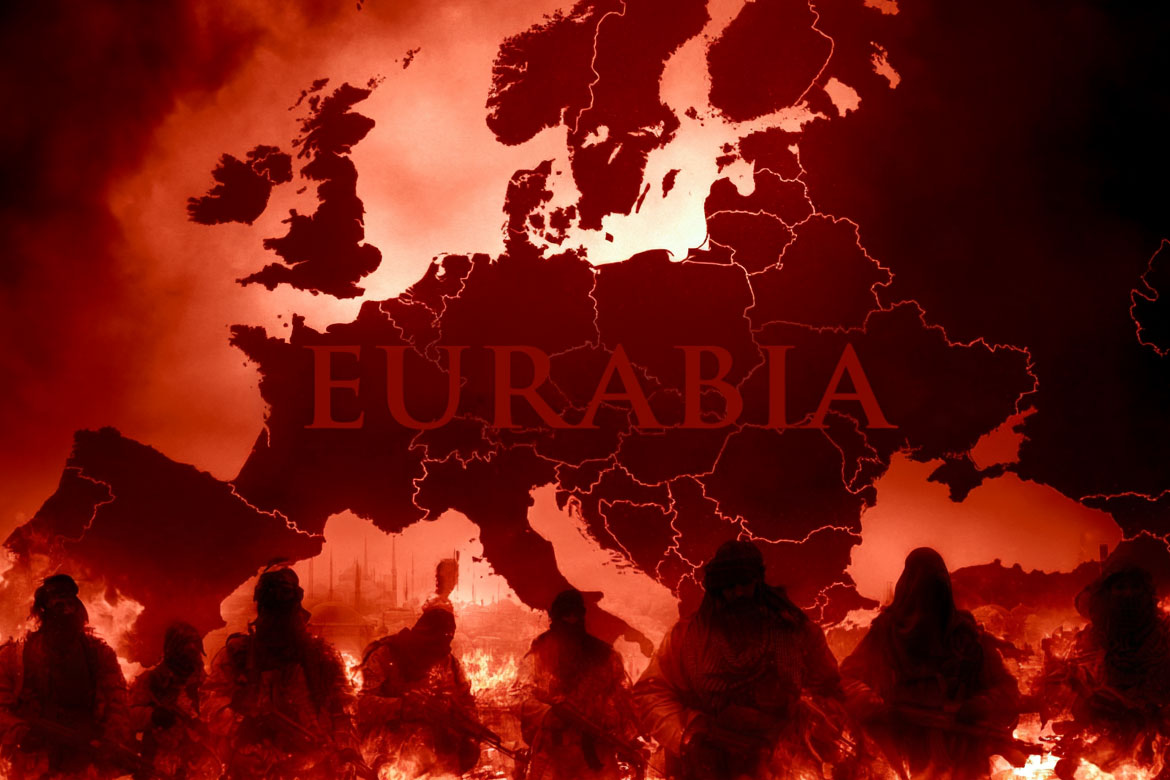
In a June 2007 issue of “The Economist,” they called the “idea of Eurabia (Islam Controlled Europe) presenting an image of Islam which is not true to its character. The concept includes a string of myths and a couple of hard truths. Most of the myths have nothing to do with the potency of Islam in Europe. In fifty years, Americans may be praising this generation of European Muslims for leading the enlightenment that Islam needed. Europe’s Islamic experience will differ from America’s, geographically and historically. That integration will be hard work for all concerned. But for the moment, at least, the prospect of Eurabia looks like scaremongering. So calm down, people. You don’t need to worry about integration and harmonization with Islam.”
What’s the scriptural parallel to all of this? Well, graciously, we see that in Hosea chapter six: through the prophet, God told Israel he will judge them because they have left obedience to his word. Yet a loving, gracious God still says, “Come, and let us return to the Lord, for he is torn, but he will heal us. He has stricken, but he will bind us up. After two days he will revive us. On the third day he will raise us up, that we may live in his sight. Let us know. Let us pursue the Lord’s knowledge. His going forth is established as the morning. He will come to us like the rain, like the latter and the former. Rain to the earth.”
A Postscript
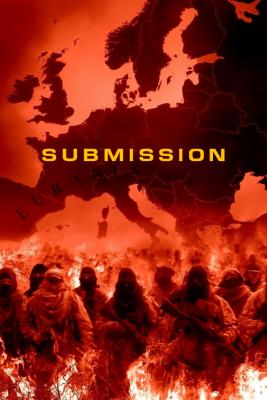
In Arabic, the word “Islam” means “Submission” in English.
In October 2007, I presented this briefing in its entirety at the annual Strategic Perspectives Conference hosted by Chuck Missler. The video was never publicly released. Its content has proven more prophetic than most thought at the time. Perhaps it was for such a time as this...
To view the full hour-long video presentation, visit K-HouseTV, watch in the K-House TV app or watch on our YouTube channel.